Healthcare Accounting in Louisiana
Louisiana clinic owners running $1M to $50M in revenue operate in one of the country's most dominant single-system markets, with Ochsner Health's gravity reshaping South Louisiana outpatient economics. Healthcare accounting in Louisiana means modeling the 4.25% top individual income tax rate (reduced from 6% under the 2021 reform package, which also eliminated the federal income tax deduction at the individual level), the graduated 3.5% to 7.5% corporate income tax, the active Certificate of Need program administered through the Louisiana Department of Health's facility need review, the Pass-Through Entity Tax election (math reworked under post-2021 rules), Healthy Louisiana Medicaid managed care across multiple MCOs (the state adopted ACA expansion in 2016), and hurricane business interruption exposure that affects every Gulf Coast practice.
Financial leadership for Louisiana clinics operating in one of the country's most dominant single-system markets
Ochsner Health is the dominant operator across South Louisiana to a degree few states see from any single system. Independent clinics here need a CFO function that reads the Ochsner picture clearly and structures financials accordingly.
Serving outpatient clinics across New Orleans, Baton Rouge, Shreveport, and the rest of Louisiana.
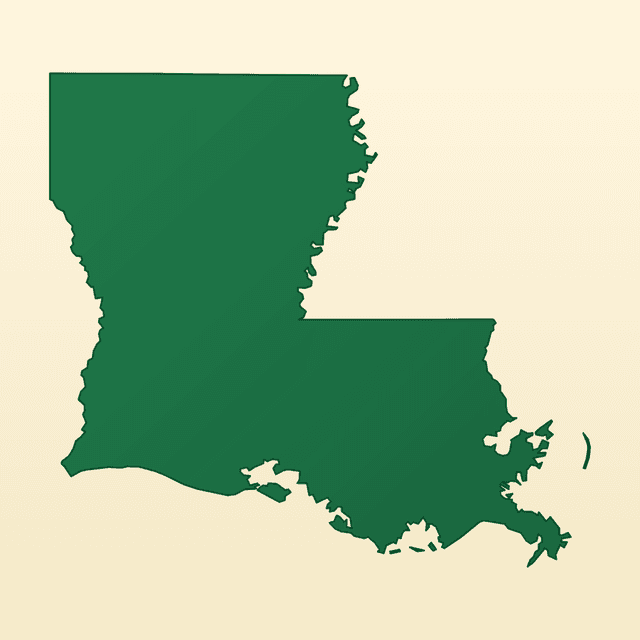
Louisiana at a glance
Louisiana Healthcare Landscape
What it actually looks like to run an outpatient clinic in Louisiana
Louisiana's outpatient market is shaped by Ochsner Health's dominance to a degree few states see from any single system. Ochsner operates across South Louisiana with an extensive ambulatory network, multiple acute hospitals, an academic affiliation through Ochsner Clinical School / University of Queensland, and a captive insurance product (Ochsner Health Plan). LCMC Health is the second-largest system in New Orleans, anchored by University Medical Center, Children's Hospital New Orleans, and several acute hospitals. Tulane Medical Center operates as a smaller New Orleans presence under HCA after restructuring. Our Lady of the Lake (Franciscan Missionaries of Our Lady Health System) anchors Baton Rouge. Willis-Knighton anchors Shreveport.
The specialty mix favors cardiology, oncology, endocrinology, and chronic disease management because of Louisiana's high cardiovascular disease, diabetes, and obesity rates per CDC data. Behavioral health is constrained by workforce supply. Dental and dermatology have active PE-backed presence across New Orleans, Baton Rouge, and Lafayette. The aesthetic market is smaller than most Southeast metros but exists in pockets of New Orleans affluence.
The regulatory frame includes an active Certificate of Need program and a Medicaid program (Healthy Louisiana) delivered through multiple managed care organizations. Louisiana adopted ACA Medicaid expansion in 2016, which materially changed the payer mix for clinics serving lower-income populations. The state's hurricane and weather risk also shapes financial planning in ways that do not factor into most state-level analyses. Practices in New Orleans, Baton Rouge, and along the Gulf Coast carry storm-related business interruption exposure that needs explicit treatment in cash reserves and insurance planning.
Dominant outpatient specialties
Louisiana's high cardiovascular disease, diabetes, and obesity rates per CDC data create a chronic disease management market that is unusually deep relative to the state's population. Cardiology, endocrinology, nephrology, and chronic disease primary care operate in higher-volume environments than the same specialties in less burdened states.
- Cardiology and endocrinology, reflecting Louisiana's chronic disease burden
- Oncology and infusion, with Ochsner and LCMC referral concentration
- Dental and DSO-aligned dental groups, with active consolidation across New Orleans and Baton Rouge
- Dermatology and Mohs surgery, with PE-backed presence across the major metros
- Behavioral health and substance use treatment, growing but workforce-constrained
- Primary care, with employer-direct and federal payer mix shaping economics
Major systems you compete against
Louisiana's hospital map is more concentrated than most Southeast peers. South Louisiana is functionally Ochsner-dominated with LCMC and FMOLHS as the principal counterweights. Northwest Louisiana is Willis-Knighton. Independent clinics across South Louisiana navigate Ochsner's gravity well rather than around it.
Ochsner Health
Dominant system across South Louisiana. Extensive ambulatory network, multiple acute hospitals, an academic affiliation, and a captive insurance product (Ochsner Health Plan). Largest non-profit health system in the state.
LCMC Health
Second-largest New Orleans system, anchored by University Medical Center, Children's Hospital New Orleans, Touro Infirmary, East Jefferson General Hospital, West Jefferson Medical Center, and Lakeview Regional Medical Center.
Tulane Medical Center
Operates under HCA Healthcare in New Orleans with academic affiliation through Tulane University School of Medicine. Smaller footprint than Ochsner or LCMC but academic referral relevance.
Our Lady of the Lake / FMOLHS
Franciscan Missionaries of Our Lady Health System is the dominant operator in Baton Rouge through Our Lady of the Lake Regional Medical Center and an extensive ambulatory network. Statewide reach with multiple anchor hospitals.
Willis-Knighton Health System
Largest system in Northwest Louisiana, anchored in Shreveport. Independent non-profit with multiple acute hospitals and a regional ambulatory network across the Ark-La-Tex.
Lafayette General (now Ochsner Lafayette General)
Ochsner expanded into the Lafayette market through the Lafayette General acquisition, extending Ochsner's footprint into Acadiana. Reshaped competitive dynamics for independent practices across Southwest Louisiana.
Tax & Regulatory
The Louisiana rules your accountant should already know
Louisiana's tax math improved materially after the 2021 reform package that reduced individual and corporate rates. The CON program remains an active constraint, and the Medicaid framework after 2016 expansion has stabilized into a multi-MCO managed care environment.
Rates and thresholds move, often every legislative session. Treat what follows as a starting point for a conversation with your tax adviser rather than current filing guidance, and confirm anything you plan to act on against the state’s own published rates.
4.25% top individual income tax rate
Louisiana's individual income tax was reformed in 2021 with rate reductions and elimination of the federal income tax deduction. The top rate is now 4.25%, down from 6%. The change removed Louisiana's previous unusual feature of allowing federal income tax deduction. For most clinic owners the after-tax economics improved meaningfully, but tax planning should not rely on pre-2022 assumptions.
Source: Louisiana Department of Revenue
Graduated corporate income tax (3.5% to 7.5%)
Louisiana's corporate income tax is graduated from 3.5% to 7.5% based on net income, with the top rate applying above $150,000 in net income. For most clinic structures S corp or PLLC remains preferable. For groups with C corp blockers in MSO structures, the graduated rate makes the calculation more nuanced than in flat-rate states.
Source: Tax Foundation: Louisiana
Active Certificate of Need program
Louisiana maintains an active CON program (under the broader 'facility need review' framework) administered by the Louisiana Department of Health. CON applies to hospitals, nursing homes, ambulatory surgical centers in specified circumstances, and other categories. The process timeline runs months and competing applicants can contest filings. Practices considering capital deployment need to model CON timing into financial plans.
Source: Louisiana Department of Health: Facility Need Review
Healthy Louisiana (Medicaid managed care)
Louisiana adopted ACA Medicaid expansion in 2016. Healthy Louisiana is the managed care delivery model, with plans currently including Aetna Better Health, AmeriHealth Caritas Louisiana, Healthy Blue, Humana Healthy Horizons, Louisiana Healthcare Connections, and UnitedHealthcare Community Plan. Plan-level realization differs and matters for practices with material Medicaid volume.
Pass-Through Entity Tax election
Louisiana adopted an optional Pass-Through Entity Tax election allowing partnerships and S corps to pay tax at the entity level on members' distributive shares, restoring federal SALT-cap deductibility. The election should be modeled annually because the federal benefit depends on owners' marginal federal rates and the Louisiana liability size. The 2021 individual tax reform changed the underlying math, so any election analysis using pre-2022 assumptions needs to be redone.
Local Market Dynamics
The market forces that show up on every Louisiana P&L
Louisiana operating dynamics are dominated by Ochsner's gravity in South Louisiana, the Baton Rouge FMOLHS footprint, the Willis-Knighton anchor in the Northwest, and the hurricane and storm risk that affects every Gulf Coast practice.
Ochsner dominance and contracting power
Ochsner's combined acute, ambulatory, employed-physician, and insurance footprint creates a strategic environment where independent practices in South Louisiana operate within Ochsner's perimeter. Contract economics with the Ochsner Health Plan, referral relationships with Ochsner-employed specialists, and competition for clinical staff against Ochsner's compensation scales all shape the picture. The strategic question for an independent specialist is rarely 'how do I compete with Ochsner' and more often 'where do I fit in the network architecture they have built.'
Hurricane and business interruption exposure
Practices along the Gulf Coast and in New Orleans, Baton Rouge, and Lake Charles carry real business interruption exposure from hurricanes and tropical storms. The financial plan needs explicit treatment of cash reserves sized to weather a storm-related closure, business interruption insurance coverage modeled to actual gap exposure (not headline policy limits), and disaster recovery planning for EHR, billing, and operational continuity. Hurricane Ida (2021), Hurricane Laura (2020), and historical events have all caused multi-week closures for affected practices. Owners who treat hurricane risk as a contingency rather than a planning parameter are typically under-reserved.
Post-Medicaid expansion payer mix shift
Louisiana's 2016 Medicaid expansion materially shifted payer mix for clinics serving lower-income populations, reducing self-pay and uninsured exposure while increasing Healthy Louisiana managed care volume. Plan-level realization tracking matters because the participating MCOs have different realization rates and the aggregate Medicaid line on a P&L masks the actual unit economics.
Wage levels and supply constraints
Louisiana medical assistant and RN wages run below national medians per BLS data but New Orleans has been narrowing the gap. Nursing workforce supply has been constrained statewide for several years, with retention challenges intensifying after pandemic-era turnover. Practices that have not refreshed compensation benchmarks since 2021 are typically losing staff to systems that pay above market.
How Sorso Helps Louisiana Clinics
Healthcare-specialized accounting and CFO support, built for Louisiana operating reality
Louisiana clinics we work with are typically multi-location practices in New Orleans, Baton Rouge, Lafayette, or Shreveport dealing with Ochsner contracting dynamics, hurricane reserve planning, and the PTE election math under the post-2021 tax framework.
- •Monthly accounting with location- and provider-level P&Ls reconciled to your EHR and PM system.
- •Fractional CFO support for Louisiana clinics in the $3M to $50M range, including PTE election modeling under post-2021 rules, hurricane reserve and business interruption planning, and Ochsner / LCMC / FMOLHS competitive positioning.
- •Plan-level realization analysis for Healthy Louisiana MCOs, Ochsner Health Plan, Blue Cross Blue Shield of Louisiana commercial, UnitedHealthcare, Humana, and Aetna.
- •Cash reserve and business interruption modeling tied to actual storm-risk exposure rather than generic emergency-fund rules of thumb.
- •Specialty support for cardiology, dental, dermatology, behavioral health, oncology / infusion, and primary care.
Louisiana clinics we onboard usually share two unmodeled exposures: hurricane business interruption that has been treated as a contingency rather than a planning parameter, and PTE election math that has not been redone under the post-2021 reform framework.
Run your own numbers first
Before any of the Louisiana specifics matter, it helps to know whether your practice is off-benchmark at all. These are free, need no email, and run in your browser.
Common questions from Louisiana clinic owners
How do we compete against Ochsner as an independent specialist?
In most South Louisiana markets, the strategic question is not how to compete but where to fit. Ochsner's combined acute, ambulatory, employed-physician, and insurance footprint means an independent specialist operates within Ochsner's perimeter on referrals, contracting, and staff competition. For some specialties (subspecialties Ochsner does not employ at depth, geographies where Ochsner is thinner) independent operation works well. For others, formal affiliation, joint venture, or sale becomes the better risk-adjusted option. We do not push toward any specific strategic outcome. We build the financial picture that lets owners see what their independent economics actually look like over five years versus the alternatives, then negotiate from a defensible position when conversations happen.
How should we model hurricane business interruption?
Two questions matter. First, cash reserves: a Gulf Coast practice should hold operating cash sized to cover fixed costs through a realistic closure window (often three to six weeks for a major event when factoring in clean-up, utility restoration, and patient return). Second, business interruption insurance: standard policies often exclude flood damage and have waiting periods that leave a real gap. We model the actual exposure against the policy terms (not the headline limits) and identify the gap. Hurricane Ida in 2021 caused multi-week closures for affected New Orleans practices. The financial plan should treat that as a planning parameter, not a contingency.
Should we redo our PTE election analysis after the 2021 tax reform?
Yes. The 2021 reform reduced individual rates and eliminated the federal income tax deduction at the individual level. The PTE election math under the pre-2022 framework no longer applies. For most clinic owners with material Louisiana-source income, the election remains beneficial, but the magnitude of the federal SALT-cap benefit is different and the calculation needs to be reworked annually. The interaction with the federal QBI deduction also matters and varies by partner. We rebuild the analysis for clients under current rules.
By specialty
Specialty-specific accounting in Louisiana
Clinic finance in Louisiana does not look the same across specialties. Benchmarks, payer mix, and cost structure differ materially.
Dental
Accounting and fractional CFO
Physical Therapy
Accounting and fractional CFO
Dermatology
Accounting and fractional CFO
Mental Health
Accounting and fractional CFO
Urgent Care
Accounting and fractional CFO
Med Spa
Accounting and fractional CFO
Chiropractic
Accounting and fractional CFO
Ophthalmology
Accounting and fractional CFO
Other Locations We Serve
We also serve outpatient clinics in
Connecticut
Healthcare accounting
Oregon
Healthcare accounting
Kentucky
Healthcare accounting
Oklahoma
Healthcare accounting
Iowa
Healthcare accounting
Utah
Healthcare accounting
Nevada
Healthcare accounting
Arkansas
Healthcare accounting
See all states we serve — the full directory, with what is genuinely different in each one.
Ready to see how your Louisiana clinic compares?
Take our 4-minute financial assessment. Find out what your books are not telling you.

Founder of Sorso and a CFA charterholder. Before Sorso, Stan spent 19 years in corporate finance at institutions including UniCredit and Société Générale — managing a $450M loan portfolio and making senior partner at a major mezzanine lender by 29 — then built a fractional CFO firm exclusively for outpatient healthcare clinics.