Healthcare Accounting in New Jersey
New Jersey has one of the highest business tax burdens in the country and the highest average property tax. For NJ clinic owners with $1M to $50M in revenue, healthcare accounting is about making every planning lever count. The 9% Corporation Business Tax with a 2.5% Corporate Transit Fee on taxable income above $10M (effective top rate 11.5%) rewards S corp and PLLC structures. The BAIT pass-through entity election restores federal SALT deductibility and typically produces $15K to $75K+ in annual federal tax savings for owners with meaningful net income. Horizon BCBS commercial dominance and NJ FamilyCare Medicaid managed care both need plan-level realization tracking across North, Central, and South Jersey.
Financial leadership for New Jersey clinics operating in one of the highest-cost healthcare environments in the US
NJ is among the highest physician density per capita in the country (Massachusetts and DC rank highest per AAMC data). It also ranks 49th of 50 in the Tax Foundation's 2026 State Tax Competitiveness Index. Independent clinics that survive here earn every dollar of margin twice.
Serving outpatient clinics across Newark, Jersey City, Hackensack, and the rest of New Jersey.
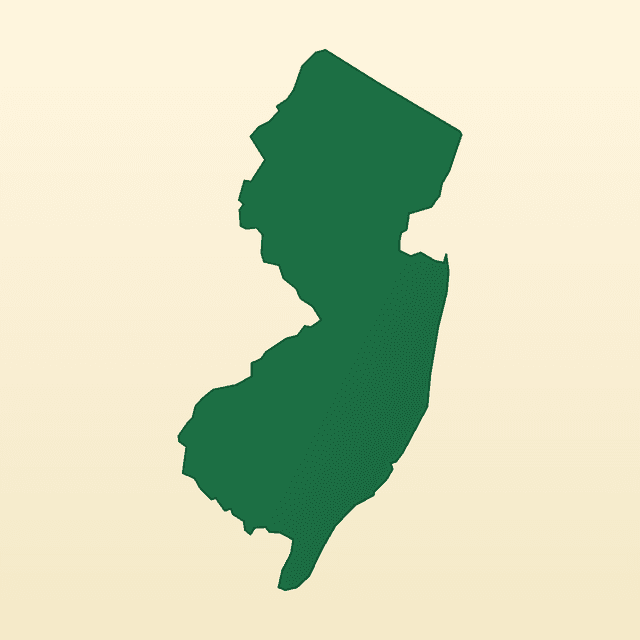
New Jersey at a glance
New Jersey Healthcare Landscape
What it actually looks like to run an outpatient clinic in New Jersey
New Jersey is one of the most intense healthcare markets in the country, and it does not get discussed that way often because it sits in the shadow of New York and Philadelphia. NJ is among the highest physician density per capita in the country (Massachusetts and DC rank highest per AAMC data), which means clinics here compete for patients in a labor market where supply is deep but so is system competition. The state is dominated by five large systems that together control the majority of inpatient capacity and a very large share of outpatient employed physicians: RWJBarnabas Health, Hackensack Meridian Health, Atlantic Health System, Virtua Health in the south, and Inspira Health.
The state breaks into three operating regions. North Jersey (Bergen, Passaic, Essex, Hudson, Morris, Union counties) is a dense commercial PPO market with New York-adjacent cost structure and dense hospital system presence. Central Jersey (Middlesex, Mercer, Somerset, Monmouth, Ocean) is where RWJBarnabas and Hackensack Meridian compete directly and where most of the state's new medical office real estate has been built over the last decade. South Jersey (Burlington, Camden, Gloucester, Atlantic, Cape May) operates almost like a Philadelphia suburb, with Virtua, Inspira, Cooper, and Jefferson Health all active.
The operating math is brutal. NJ wages for clinical staff run close to the New York median. Real estate for medical office runs above most Sun Belt markets. The state business tax burden is among the highest in the country, even after the 2024 changes. The payer mix is commercial-heavy and relatively favorable, but Horizon Blue Cross Blue Shield of NJ dominates the commercial market in a way that limits negotiation leverage. What keeps the state interesting is patient density and willingness to pay. NJ households have high median incomes, and the aesthetic, concierge, and direct-pay specialty markets are deep for practices positioned to serve them.
Dominant outpatient specialties
NJ dermatology, GI, and orthopedics have all been unusually active PE targets. If you are running a multi-location specialty group in the state, valuation readiness is not optional. The difference between a prepared seller and an unprepared one in this market is routinely 1-2 turns of EBITDA.
- Dermatology and aesthetics, with one of the most PE-consolidated markets in the country across Bergen and Morris counties
- Orthopedics and sports medicine, particularly strong in Monmouth and Morris counties
- Cardiology, with a deep independent community cardiology presence in North and Central Jersey
- Gastroenterology and endoscopy, with active ASC-based independent groups
- Behavioral health, expanding under state parity enforcement and Medicaid expansion
- Dental and DSO-aligned dental groups, heavily present across the state
Major systems you compete against
NJ hospital systems have been on an acquisition streak for a decade. Independent practices that want to stay independent in North and Central Jersey need to know exactly what they are offering patients that the systems are not.
RWJBarnabas Health
Largest NJ health system; 14 hospitals and 9,000+ aligned physicians across Central and Northern NJ.
Hackensack Meridian Health
18 hospitals and extensive ambulatory network; dominant presence in Bergen County and Monmouth County.
Atlantic Health System
Seven hospitals and more than 550 care sites across New Jersey; anchors Morris, Sussex, and Warren counties.
Virtua Health
Largest South Jersey system with five hospitals and 280+ locations; dominant in Burlington and Camden counties.
Inspira Health
Multi-hospital South Jersey system; strong primary care and community outpatient presence in Gloucester and Cumberland counties.
Tax & Regulatory
The New Jersey rules your accountant should already know
NJ's tax environment is genuinely difficult and one of the biggest reasons out-of-state CPAs get NJ clinics in trouble. The Corporation Business Tax, the BAIT, and NJ's aggressive nexus posture all matter for how a practice is structured and reported.
Rates and thresholds move, often every legislative session. Treat what follows as a starting point for a conversation with your tax adviser rather than current filing guidance, and confirm anything you plan to act on against the state’s own published rates.
9.0% Corporation Business Tax (CBT)
NJ imposes one of the highest corporate tax rates in the country. The rate is 9% when entire net income is over $100K, 7.5% between $50K and $100K, and 6.5% at $50K or less. A separate 2.5% surtax on allocated income over $1M expired at the end of 2023; since 2024 a 2.5% Corporate Transit Fee applies to taxable net income over $10M through 2028, which puts the top rate at 11.5% for the largest practices.
Source: NJ Division of Taxation: CBT
Business Alternative Income Tax (BAIT)
NJ's BAIT allows pass-through entities to elect entity-level taxation, restoring federal SALT deductibility. For a NJ practice owner with meaningful net income, the BAIT election typically produces $15K-$75K+ in annual federal tax savings depending on income and structure. The mechanics changed in 2023 and now closely mirror the federal SALT workaround. This is the single most impactful tax planning lever for most NJ independent practices.
Source: NJ Division of Taxation: BAIT
Corporate Practice of Medicine
NJ's corporate practice of medicine rules require physicians to operate through a Professional Corporation or PLLC with physician-only ownership. The NJ Board of Medical Examiners enforces this strictly. MSO and friendly-PC structures for DSO and PE transactions are common in NJ but must be carefully structured. Dental, chiropractic, and other licensed professions follow similar ownership rules.
Office-Based Surgery (OBS) requirements
NJ has specific regulations for office-based surgery practices. Facilities performing surgery requiring more than minimal sedation must meet NJ Department of Health rules for anesthesia, equipment, and reporting. Med spa and aesthetic practices pushing into higher-level procedures need to understand when OBS licensure is triggered.
Property tax exposure
NJ has the highest average property tax burden in the country, with medical office properties routinely carrying property tax bills 1.5-2.5% of assessed value per year. For a clinic that owns its real estate through an LLC, property tax is often the largest single fixed cost outside payroll. NJ property tax appeals are a legitimate tool that is routinely underused.
Local Market Dynamics
The market forces that show up on every New Jersey P&L
NJ operating economics penalize financial imprecision. A half-percent of margin slippage in NJ hits the bottom line harder than a full percent in most Sun Belt markets because the fixed cost base is so high.
Horizon BCBS commercial dominance
Horizon Blue Cross Blue Shield of NJ covers the majority of NJ commercial insured lives. Other meaningful commercial carriers include Aetna, Cigna, UnitedHealthcare, and the Aetna-CVS integrated product. Fee schedule negotiation with Horizon is effectively the largest recurring business negotiation an NJ clinic owner has, and most enter it without the realization data, benchmarking, or contract timing to make it a real negotiation.
NJ FamilyCare (Medicaid managed care)
NJ Medicaid runs through managed care plans (Aetna Better Health, Horizon NJ Health, UnitedHealthcare Community Plan, Wellpoint, and Fidelis). Plan-level realization varies. For a practice with meaningful Medicaid volume, plan-level contract review is the fix.
Source: NJ FamilyCare
Wage environment
NJ clinical staff pay is measured inside the New York-Newark-Jersey City metro by BLS OES, where the 2025 average (mean) wage is $49,590 for medical assistants and $119,600 for RNs, with North Jersey in particular facing direct hiring competition from Manhattan and Long Island hospitals. Wage floors stay high. A Bergen or Morris County practice still working off a 2020 staffing budget is meaningfully underpaying across MA, RN, and NP roles.
Real estate cost stack
NJ medical office rent plus property tax creates one of the highest occupancy cost structures outside Manhattan and San Francisco. Bergen County, Morris County, and Monmouth County medical office rents frequently run $35-60 per square foot NNN, with property taxes on top. Multi-year leases signed in 2020-2021 at aggressive escalators are now pressuring margins in ways most owners did not anticipate.
How Sorso Helps New Jersey Clinics
Healthcare-specialized accounting and CFO support, built for New Jersey operating reality
NJ clinics we work with are typically facing one of three situations: PE inbound where readiness makes the difference in valuation, margin compression from the state's cost stack that needs structural fixes, or multi-state expansion where NJ adds real operational complexity. We build for all three.
- •Monthly accounting with location- and provider-level P&Ls reconciled to your EHR, PM system, and surgery center software.
- •Fractional CFO support for New Jersey clinics in the $3M to $50M range, with BAIT pass-through election modeling, property tax appeal planning on owned medical real estate, and Horizon BCBS fee schedule negotiation workstreams.
- •BAIT election modeling and quarterly tracking, plus NJ CBT planning for C corp-structured practices.
- •Plan-level realization analysis for Horizon BCBS, NJ FamilyCare plans, and commercial payers.
- •Specialty support for dermatology, GI, orthopedics, cardiology, dental, mental health, and ASC-integrated surgical practices.
If you own an NJ clinic and your CPA has not modeled your BAIT election, your Horizon contract timing, or your property tax appeal opportunity, you are leaving meaningful money on the table.
Run your own numbers first
Before any of the New Jersey specifics matter, it helps to know whether your practice is off-benchmark at all. These are free, need no email, and run in your browser.
Common questions from New Jersey clinic owners
Have you elected BAIT? We keep hearing about it but have not acted.
Most NJ pass-through practices should at least model BAIT annually. The federal tax benefit comes from making NJ income tax deductible at the entity level rather than capped at $10K on the owner's personal return. For a practice owner with $400K of NJ-sourced net income, the federal tax savings is typically $25K-$40K per year. The election is time-sensitive each year and requires estimated payments, so it is not a late-decision item. We model it during onboarding for every NJ client.
We have locations in NJ and NY. How do we handle that financially?
You treat each entity as its own reporting unit and consolidate at the parent level. NJ and NY have different tax regimes (NJ CBT and BAIT versus NY Article 9-A and PTET), different professional corporation rules, different payer mixes, and different cost structures. Lumping them into one P&L hides the truth about both. We have clients with NJ/NY footprints and run location-level reporting as standard.
A PE platform is approaching us about our dermatology group. Are we ready?
You are ready when three things are true. Your last three years of monthly P&Ls tie to your tax returns within a few thousand dollars. Your adjusted EBITDA calculation is defensible by a forensic accountant doing quality-of-earnings work. Your location-level and provider-level reporting is clean enough for a buyer to independently verify. Most NJ dermatology groups are not at that bar when the first LOI arrives. Getting there takes 3-6 months of focused work and routinely adds 1-2 turns of EBITDA to the final deal value.
Sources
- BLS Occupational Employment and Wage Statistics — Medical Assistants (May 2025)
- NJ Division of Taxation: Corporation Business Tax
- NJ Division of Taxation: BAIT (Pass-Through Business Alternative Income Tax)
- NJ FamilyCare: Managed Care
- AAMC State Physician Workforce Data
- NJ Division of Taxation: Corporation Business Tax rates
- NJ Division of Taxation: Corporate Transit Fee
- Tax Foundation, 2026 State Tax Competitiveness Index
- Atlantic Health: About us
- NJ FamilyCare: Choose a health plan
By specialty
Specialty-specific accounting in New Jersey
Clinic finance in New Jersey does not look the same across specialties. Benchmarks, payer mix, and cost structure differ materially.
Dental
Accounting and fractional CFO
Physical Therapy
Accounting and fractional CFO
Dermatology
Accounting and fractional CFO
Mental Health
Accounting and fractional CFO
Urgent Care
Accounting and fractional CFO
Med Spa
Accounting and fractional CFO
Chiropractic
Accounting and fractional CFO
Ophthalmology
Accounting and fractional CFO
Other Locations We Serve
We also serve outpatient clinics in
Arizona
Healthcare accounting
Massachusetts
Healthcare accounting
Washington
Healthcare accounting
Colorado
Healthcare accounting
Virginia
Healthcare accounting
Maryland
Healthcare accounting
Tennessee
Healthcare accounting
Indiana
Healthcare accounting
See all states we serve — the full directory, with what is genuinely different in each one.
Ready to see how your New Jersey clinic compares?
Take our 4-minute financial assessment. Find out what your books are not telling you.

Founder of Sorso and a CFA charterholder. Before Sorso, Stan spent 19 years in corporate finance at institutions including UniCredit and Société Générale — managing a $450M loan portfolio and making senior partner at a major mezzanine lender by 29 — then built a fractional CFO firm exclusively for outpatient healthcare clinics.